中文版
中文版

 Phone:
  Email:
  WhatsApp:
 Description
- Model: CC-PAIL51
- Brand: Honeywell
- Series: Experion PKS Series C
- Core Function: Measures low-level temperature signals
- Type: Low-Level Analog Input Module
- Key Specs: 16 channels; TC/RTD configurable per channel; 1 s input scan
- IOTA: CC-TAIL51, 16-point, 9-inch configuration
- Application: Thermocouple and RTD temperature measurement
Product Introduction
The HONEYWELL CC-PAIL51 is a 16-channel Low-Level Analog Input module for Honeywell Experion Series C I/O. Each channel can be configured for either a thermocouple (TC) or resistance temperature detector (RTD), allowing one module to handle mixed temperature-measurement duties. Honeywell specifies channel-to-channel and channel-to-power-system isolation, cold-junction compensation, and configurable open thermocouple detection (OTD).
This module is a good fit when temperature accuracy matters more than raw acquisition speed. Its fixed input scan rate is 1 second, while the thermocouple nominal input range is -20 to +100 mV. The associated CC-TAIL51 IOTA provides the direct 16-point Series C termination interface, so both the module and IOTA should be matched during replacement.
Key Technical Specifications
| Parameter | Specification |
|---|---|
| Model | CC-PAIL51 |
| Manufacturer | Honeywell |
| Product Family | Experion PKS Series C |
| Product Type | Low-Level Analog Input Module |
| Number of Channels | 16 |
| Input Type | Thermocouple or RTD, configurable per channel |
| Input Scan Rate | 1 s |
| TC Nominal Input Range | -20 to +100 mV |
| TC Maximum Normal Input | -10 to +10 V |
| RTD Maximum Normal Input | -1 to +2 V at 100 mA |
| Channel Isolation | Fully isolated channel-to-channel and channel-to-power system |
| Common-Mode Voltage | ±250 VDC or VAC RMS |
| CMRR | Minimum 120 dB at 50/60 Hz with specified source impedance |
| Gain Error | Maximum 0.050% of full scale |
| Long-Term Drift | 500 ppm |
| Channel Bandwidth | 0 to 4.7 Hz, -3 dB |
| Operating Temperature | -40 to +70°C |
| Storage Temperature | -40 to +85°C |
| Associated IOTA | CC-TAIL51, 16-point, 9-inch |
| Termination | Direct Series C IOTA; no external Process Manager FTA required |
| Key Functions | Cold-junction compensation, OTD protection |
Honeywell’s Series C specification identifies CC-PAIL51 as the 16-channel low-level input module and confirms TC/RTD operation, 1-second scanning, configurable OTD protection, and direct connection through the Series C IOTA.
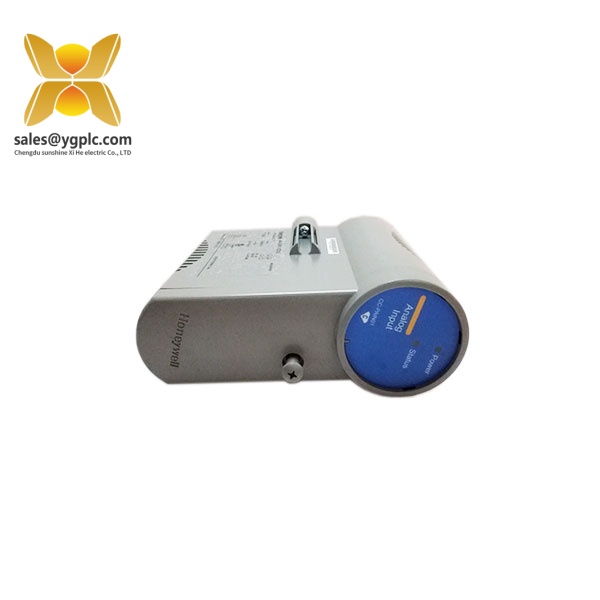
HONEYWELL CC-PAIL51
Key Features and Practical Value
- 16 isolated temperature-input channels in one Series C module.
- Supports thermocouple and RTD measurements on configurable channels.
- Built-in cold-junction compensation for thermocouple applications.
- Configurable open-thermocouple detection helps identify broken sensor circuits.
- High common-mode rejection, specified at 120 dB minimum, helps in electrically noisy plant environments.
- Direct Series C IOTA connection avoids the external Process Manager FTA required by the older LLMUX approach.
- Suitable for distributed temperature measurement in process equipment and thermal systems.
The main advantage is flexibility. One cabinet position can handle different temperature sensor types without dedicating separate modules to every signal category.
Typical Applications
Typical applications include:
- Process temperature monitoring
- Furnace and heater temperature control
- Reactor temperature measurement
- Boiler and utility equipment
- Chemical and petrochemical plants
- Semiconductor and thermal-processing equipment
- Skid-mounted process packages
Honeywell documentation also distinguishes this 16-channel architecture from the older CC-PAIM01 Low-Level Analog Multiplexer, which can support up to 64 temperature channels through separate FTAs. The choice depends on channel density, wiring architecture, and the installed Experion I/O design.
Related Models
CC-PAIM01 — Low-Level Analog Multiplexer module supporting higher channel density through compatible Process Manager temperature FTAs. It is not a direct hardware substitute for the 16-channel architecture.
CC-TAIL51 — The 16-point, 9-inch Series C IOTA specified for this low-level analog input module.
CC-PAIH02 — Series C high-level analog input module for voltage/current transmitter signals and HART applications; its signal architecture differs substantially from low-level TC/RTD input.
CC-PAIN01 — Series C high-level analog input module without HART, intended for standard transmitter-type signals rather than low-level temperature sensing.
Installation and Maintenance
Before replacement, record the complete module identification, chassis slot, IOTA type, channel assignments, sensor type, and input configuration. Photograph the terminal wiring. It is a small step, but it prevents many commissioning errors.
For thermocouple loops, verify sensor type and polarity. RTD wiring needs equal attention, particularly where lead resistance affects the measurement. Honeywell specifies a maximum RTD lead resistance of 15 Ω in the published Series C specification.
After installation, check each channel using a calibrated simulator. A practical test sequence is to verify representative thermocouple millivolt signals and RTD resistance points, then confirm the displayed process value, alarm behavior, and OTD diagnostics in Experion.
Do not judge the module from one working channel. For a spare intended for a critical plant, sample-test the complete 16-channel input architecture whenever the test setup allows it.
Quality Inspection and Test Procedure
1. Inbound inspection
- Verify part number and serial number.
- Check the nameplate and hardware revision.
- Inspect connectors, chassis interface, PCB, and housing.
- Look for corrosion, contamination, overheating, or previous repair evidence.
- Confirm the associated IOTA where supplied.
2. Live Test
Use a compatible Honeywell Experion Series C test chassis.
- Power-up and module diagnostic check
- Backplane communication verification
- Thermocouple input simulation
- RTD input simulation
- Channel isolation verification where applicable
- OTD function check
- Extended powered operation where practical
- Generate a Test Report
3. Electrical Testing
Verify supply, grounding, continuity, and applicable insulation characteristics according to Honeywell procedures. Do not apply generic high-voltage test limits without checking the manufacturer’s requirements for the installed module.
4. Firmware and Configuration Verification
Record accessible hardware and firmware information. Preserve channel configuration, sensor type, scaling, and alarm settings from the original module before replacement.
5. Final QC
After inspection, package the module using antistatic protection, cushioning, and a rigid carton. Attach a dated QC label and retain the inspection record. Test photographs or video can be provided with the shipment documentation.
Technical Replacement Pitfalls
Wrong input module: CC-PAIL51 is a low-level TC/RTD input module. Do not substitute a 4–20 mA analog input card simply because both are labeled “AI.”
IOTA mismatch: The specified companion is CC-TAIL51. Check the installed termination hardware before ordering.
Sensor configuration error: A channel configured for RTD will not behave correctly when wired as a thermocouple without the proper configuration. Record every channel before removal.
Thermocouple polarity: Reversed thermocouple wiring can produce misleading temperature readings rather than an obvious hardware fault.
Cold-junction compensation: Do not ignore CJC when validating thermocouple channels. A raw millivolt measurement alone does not prove that the complete temperature channel is correct.
RTD lead resistance: Honeywell specifies a 15 Ω maximum RTD lead resistance in the published data. Long or incorrectly wired RTD circuits can therefore introduce measurement errors.
ESD: Use a grounded antistatic wrist strap and ESD-safe work surface. Treat the module as sensitive electronic equipment throughout handling.
Procurement Guidance
For international MRO procurement, specify Honeywell CC-PAIL51, together with the hardware revision, condition, test status, warranty, country of origin, lead time, and Incoterms.
For customs documentation, a clear description such as “industrial DCS 16-channel low-level analog temperature input module” is more useful than “electronic board.” Final HS classification should be confirmed according to the actual shipment and destination-country rules.
For China-bound shipments, keep the commercial invoice, packing list, serial-number record, and physical nameplate description consistent. That makes customs review easier.
Quick Conclusion
- CC-PAIL51 is a Honeywell Series C 16-channel low-level analog input module.
- Each channel can be configured for thermocouple or RTD measurement.
- The module provides 1-second scanning, cold-junction compensation, configurable OTD protection, and isolated inputs.
- CC-TAIL51 is the documented 16-point companion IOTA.
- For replacement, verify the IOTA, channel configuration, sensor type, wiring, and Experion system compatibility before installation.