中文版
中文版

 Phone:
  Email:
  WhatsApp:
 Description
- Model: C7961E1006
- Brand: Honeywell
- Series: C7961
- Core Function: Detects ultraviolet radiation from burner flames
- Type: Dynamic Self-Checking UV Flame Detector
- Key Specs: 120 VAC, 3/4 in NPT, 96 in lead, -40°F to +175°F
Product Introduction
Honeywell C7961E1006 is a dynamic self-checking ultraviolet (UV) flame detector for automatic burner flame supervision. It uses a solid-state UV sensing element and an oscillating shutter to verify the detector itself while monitoring ultraviolet radiation from gas, oil, or combination-fuel flames. Honeywell specifies 120 VAC operation, a 3/4 in NPT mounting connection, and a 96 in color-coded leadwire assembly.
This is a burner-safety component, not a general-purpose UV sensor. The detector is designed for use with the R7851C Dynamic Self-Check Amplifier, and its NEMA 4 housing includes a quartz viewing window rated to 20 psi (138 kPa). The documented ambient range is -40°C to +80°C. One important purchasing point: the exact model has been reported as discontinued, so remaining stock should be checked carefully before a shutdown spare is committed.
Key Technical Specifications
| Parameter | Specification |
|---|---|
| Model | C7961E1006 |
| Manufacturer | Honeywell |
| Product Type | Dynamic Self-Checking UV Flame Detector |
| Sensing Technology | Solid-state ultraviolet (UV) |
| Application | Gas, oil, and combination-fuel burners |
| Supply | 120 VAC |
| Frequency | 50 / 60 Hz |
| Mounting | 3/4 in NPT |
| Lead Length | 96 in (2,438 mm) |
| Ambient Temperature | -40°F to +175°F (-40°C to +80°C) |
| Enclosure | NEMA 4 |
| Viewing Window | Quartz, rated 20 psi (138 kPa) |
| Electrical Connection | NEC Class 1 color-coded leadwires |
| Compatible Amplifier | R7851C Dynamic Self-Check Amplifier |
| Approx. Dimensions | 3 3/4 in diameter × 7 7/32 in long; 5 1/4 in diameter including mounting flange |
| Approx. Weight | 2.6 lb (1.2 kg) |
| Shutter | Dynamic self-checking shutter |
| Lifecycle | Discontinued; verify availability |
Honeywell documentation identifies C7961E1006 as a current replacement for the same part number in its flame-sensor cross-reference, with 120 VAC, 3/4 in NPT mounting, 96 in lead length, shutter checking, and R7851C amplifier compatibility.
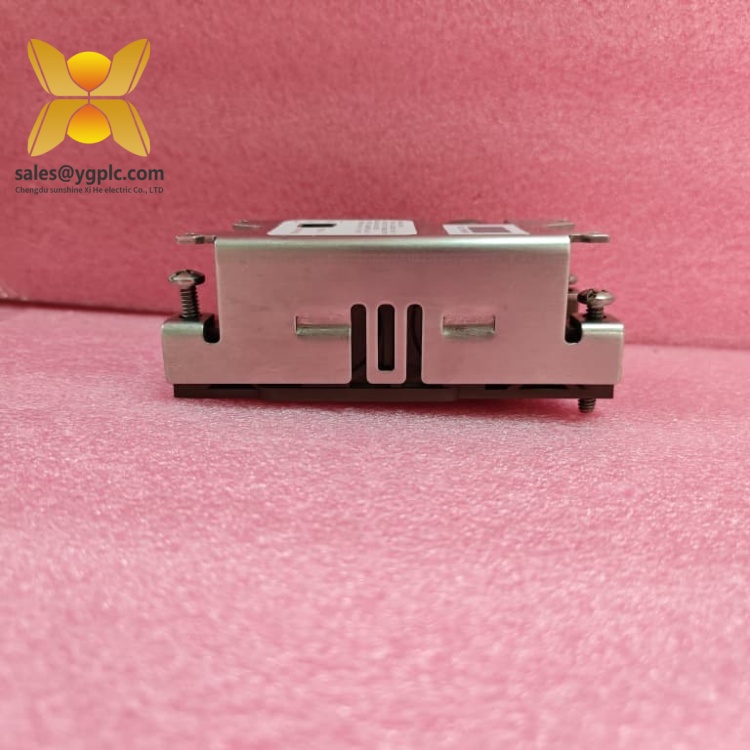
HONEYWELL C7961E1006
Application and Selection Notes
This detector is intended for burner management systems (BMS) where continuous flame supervision is required. Typical installations include industrial boilers, furnaces, ovens, process heaters, and other automatically fired combustion equipment. Honeywell’s 7800-series controls list C7961E/F flame detectors among their compatible flame-detection devices.
The self-checking feature is the key engineering point. The internal shutter periodically interrupts UV radiation reaching the sensor, allowing the associated amplifier to verify detector operation rather than relying only on a static flame signal. That makes the unit suitable for safety-related flame monitoring applications.
It is not recommended for anyone looking for an explosion-proof detector. The C7961E version is NEMA 4, while Honeywell identifies the C7961F family as the explosion-proof housing option for hazardous atmospheres.
Advantages and Limitations
Advantages
- Dynamic self-checking UV detection
- Solid-state ultraviolet sensing
- 120 VAC operation
- -40°C to +80°C ambient range
- NEMA 4 enclosure
- 3/4 in NPT mounting
- 96 in factory leadwire
- Designed for R7851C self-check amplifier
- Suitable for continuous-duty burner supervision
Limitations
The detector depends on the correct flame amplifier and optical installation. It should not be treated as a standalone burner controller.
The C7961E1006 also has a fixed 3/4 in NPT configuration. C7961 variants with 1 in NPT or connector-based interfaces are not automatically interchangeable.
Global Procurement and Shipping Notes
| Item | Recommended Handling |
| Condition | Confirm New Original / New Surplus / Tested Spare |
| Stock Status | Verify physical inventory before PO |
| Lifecycle | Confirm discontinued-stock availability |
| Lead Time | Based on actual warehouse stock |
| Warranty | State clearly on quotation and PI |
| Packaging | Protective inner wrap + rigid carton |
| Export Documents | Commercial Invoice, Packing List, COO when required |
| Shipping | Air courier for urgent burner MRO orders |
| Incoterms | FCA, EXW, FOB, or DAP |
| Customs Description | Honeywell UV flame detector for industrial burner |
| Country of Origin | Confirm from product label and supplier documentation |
For international shipments, use the complete C7961E1006 designation on the Commercial Invoice and Packing List. Avoid declaring it simply as a “sensor”; “industrial UV flame detector” is much more descriptive for customs and receiving inspection.
Quality Inspection and Test SOP
1. Inbound inspection
Verify the model, serial number, nameplate, cable length, 3/4 in NPT mounting thread, housing condition, and optical window. Check for corrosion, impact marks, contamination, yellowing, or evidence of previous repair.
2. Live test
Use a compatible Honeywell burner-control test setup with an approved R7851C amplifier. Verify detector recognition, shutter self-check operation, flame signal response, and fault response under the approved test procedure. Record actual results in a Test Report.
3. Electrical testing
Verify wiring continuity and grounding requirements according to the installation documentation. Do not apply an arbitrary 500 V insulation-resistance test across the detector electronics; follow the manufacturer’s approved procedure instead.
4. Configuration verification
Confirm the amplifier model, detector wiring, mounting arrangement, and burner-management configuration before replacement. Photograph the original wiring and detector orientation.
5. Final QC
Protect the detector and quartz window from impact, use appropriate cushioning, pack in a rigid carton, and attach a QC Passed label with inspection date. Test photographs or video can be provided when the stated test has actually been performed.
Common Replacement Risks
Amplifier mismatch: C7961E1006 is specified for use with the R7851C Dynamic Self-Check Amplifier. Do not pair it with an unrelated flame amplifier by voltage alone.
Mounting mismatch: The E1006 uses 3/4 in NPT. C7961E1014 uses 1 in NPT, despite belonging to the same detector family.
Hazardous-area mismatch: NEMA 4 is not the same certification as an explosion-proof housing. The C7961F family is the relevant Honeywell configuration for explosion-proof service.
Optical alignment: The detector requires correct faceplate alignment and shutter positioning. Installation geometry matters; simply seeing the flame through the sighting path does not prove correct operation.
ESD and contamination: Keep the sensing assembly and quartz window clean. During maintenance, avoid touching optical surfaces with bare hands.
One field rule is worth remembering: photograph the detector orientation before removal. A replacement installed a few degrees differently can turn a simple spare swap into a burner commissioning problem.
Related Models
C7961E1014: Related C7961 UV flame detector with 1 in NPT mounting and the same general 120 VAC / R7851C architecture.
C7961E1022: C7961 variant using a 5-pin Brad Harrison-type connector and 1 in NPT mounting.
C7961E1030: Similar connector-based version with 3/4 in NPT mounting.
R7851C: Dynamic Self-Check Amplifier designed to operate with C7961 UV flame detectors.
Quick Conclusion
- Honeywell dynamic self-checking UV flame detector.
- 120 VAC, 50/60 Hz.
- 3/4 in NPT mounting with 96 in leadwire.
- NEMA 4 housing with 20 psi quartz viewing window.
- Ambient operating range: -40°C to +80°C.
- Designed for the R7851C self-check amplifier.
- Not an explosion-proof detector.
- ⚠️ Lifecycle note: the exact C7961E1006 has been listed as discontinued, so actual stock and replacement status should be verified before purchase.
FAQ
What is the HONEYWELL C7961E1006?
It is a dynamic self-checking ultraviolet flame detector for supervising gas, oil, and combination-fuel burner flames.
What amplifier does it use?
Honeywell specifies the R7851C Dynamic Self-Check Amplifier for this detector.
What voltage does it require?
The documented electrical rating is 120 VAC at 50/60 Hz.
What is the mounting thread?
This exact configuration uses 3/4 in NPT. The 1 in NPT C7961E1014 is a different configuration.
Is it explosion-proof?
No. The C7961E configuration is NEMA 4. Honeywell identifies the C7961F housing as the explosion-proof version for hazardous atmospheres.
Is C7961E1006 still manufactured?
A current industrial distributor listing identifies the exact model as discontinued, with a discontinuation date of March 12, 2022. Honeywell’s cross-reference documentation still lists C7961E1006 as its own current replacement designation, so buyers should verify actual lifecycle and available successor options with Honeywell or the system supplier.