中文版
中文版

 Phone:
  Email:
  WhatsApp:
 Description
- GE 350-027750-746000 VMIVME-7750-746000 | Genuine GE Fanuc VME SBC with PMC Expansion Slot
Product Core Brief
- Model: VMIVME-7750-746000, OEM Drawing Number: 350-027750-746000
- Brand: GE Fanuc / Abaco Systems (Former VMIC)
- Series: VMIVME VMEbus Single Board Computer Series
- Core Function: Real-time VME system controller for industrial DCS, test & measurement and embedded automation racks
- Condition: New Original Surplus, Non-refurbished, factory burn-in tested
- Type: 6U Single-Slot VMEbus Single Board Computer (SBC)
- Key Specs: Pentium III 1.26GHz | Max 512MB PC133 SDRAM | Dual RJ45 Ethernet | VME64 Compliant
Key Technical Specifications
| Parameter | Value |
|---|---|
| Full Part Number | VMIVME-7750-746000, Drawing No. 350-027750-746000 |
| Form Factor | 6U Eurocard, single-slot VMEbus |
| CPU | Intel Pentium III 1.26 GHz, 133 MHz FSB, 512 KB L2 ATC Cache |
| Chipset | Intel 815E |
| System Memory | 1×144pin SODIMM PC133 SDRAM, up to 512 MB, optional ECC |
| VMEbus Interface | VME Rev C.1 / VME64, Tundra Universe II PCI-VME bridge, A24/A32, D32/D64 transfer |
| Onboard Graphics | AGP SVGA, 4 MB display buffer, max 1600×1200 resolution, VGA D-Sub output |
| Network Ports | Dual independent 10/100 Base-TX RJ45 Ethernet, BootWare remote boot support |
| Storage Interfaces | Primary IDE (2.5” HDD), Secondary IDE for CompactFlash up to 1 GB, BIOS bootable from CF |
| Expansion Slot | 1×32-bit 33 MHz PMC mezzanine card slot |
| Serial I/O | 4×16550 UART COM ports, max 115.2 kbps baud rate |
| Aux Interfaces | PS/2 keyboard & mouse, 1×USB 1.1 port, RTC battery-backed CMOS |
| Operating Temperature | -40 °C to +85 °C (conduction-cooled passive heat sink) |
| Power Draw | ~30 W typical full-load consumption |
| Shock & Vibration | 30 g 11ms shock, 5 g RMS 10–500 Hz vibration compliant |
| MTBF Rating | > 72,000 operating hours under industrial rack conditions |
| Supported OS | VxWorks, Windows NT 4.0, Linux, QNX real-time embedded systems |
Product Introduction
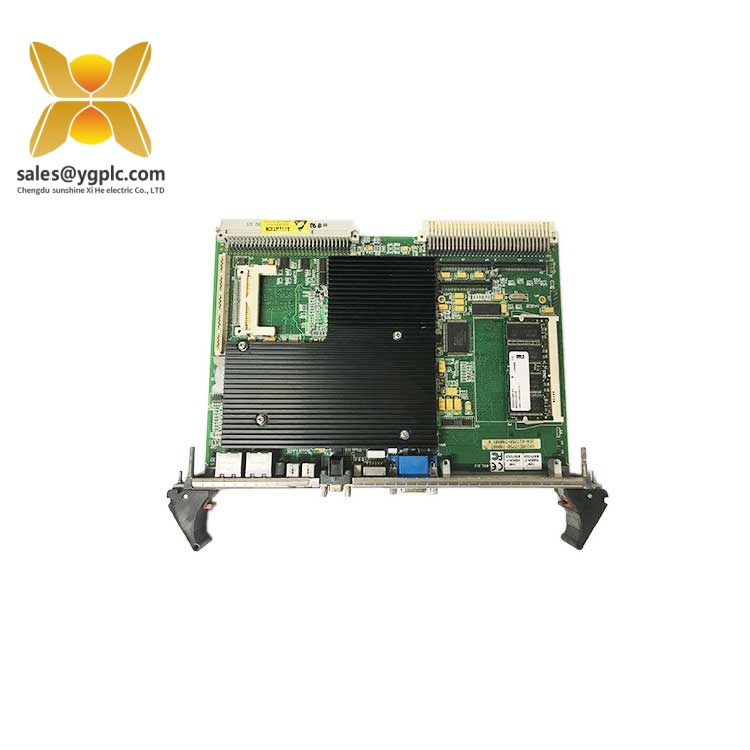
GE 350-027750-746000 VMIVME-7750-746000
Application Scenarios & Pain Points
Typical Application Scenarios
- Power Generation Turbine Control Systems – Gas/steam turbine VME DCS racks
Real-time vibration, temperature and valve position closed-loop monitoring; VxWorks OS compatibility meets power grid audit standards.
- Aerospace Test & Measurement Benches – VME-based signal acquisition cabinets
PMC slot accepts high-speed ADC/DAC mezzanine cards for component environmental stress testing.
- Heavy Industry Metallurgical Rolling Mill Automation – Continuous process control racks
Wide -40°C to +85°C operating range tolerates furnace heat and workshop temperature swings.
- Naval & Marine Onboard Control Cabinets – Rugged VME navigation & machinery monitoring
Conduction cooling and vibration rating suit sealed, fanless shipboard equipment enclosures.
- Legacy Factory Automation Retrofit Projects – Obsolete Motorola MVME rack upgrades
Drop-in VME slot replacement without full cabinet rewiring or control software overhauls.
Real Field Case
Compatibility & Replacement Matrix
- VMIVME-7750-746000 (350-027750-746000) → VMIVME-7750-734000 : Partial compatibility (identical VME pinout; 734000 runs lower 800MHz CPU, BIOS version mismatch may require OS driver adjustment)
- VMIVME-7750-746000 → VMIVME-7750-760000 : Direct hardware replacement (same mechanical form factor, dual Ethernet layout; minor CMOS jumper reconfiguration required post-install)
- VMIVME-7750-746000 → VMIVME-7807 : Not compatible (PowerPC architecture, different VME bridge chipset, OS driver stack fully incompatible)
- VMIVME-7750-746000 → Motorola MVME162 : Full rack rework required (non-Pentium architecture, different bus addressing, incompatible firmware and control logic)
SOP Quality Transparency Inspection Process
- Inbound Receiving Inspection
Trace original GE factory packing slip and customs clearance records; scan serial number against Abaco/GE Fanuc component database to verify OEM authenticity. Full PCB visual inspection for heat sink deformation, solder joint cracks, capacitor bulging or scratch damage to conformal coating; cross-check accessories: rack ejector latches, CMOS backup battery, factory datasheet and original test certificate.
- Live Bench Functional Test
Test bench built with standard VME64 backplane rack, Fluke 115 multimeter and VxWorks simulation environment. Full 5V/3.3V power-on self-test to verify all front-panel LED indicators, VGA display output and dual Ethernet link negotiation; simulate full VME master/slave data transfer cycles to validate Universe II bridge performance; run 26-hour continuous thermal aging under maximum memory and network load to record heat sink temperature stability. Signed digital test reports, Ethernet communication screenshots and inspection photos can be provided to customers upon request.
- Electrical Safety Parameter Test
500 V megohmmeter insulation resistance test with pass threshold >10 MΩ between signal circuits and rack ground; full ground continuity verification across PCB ground planes; dielectric withstand voltage test for all front-panel I/O connectors.
- BIOS & Configuration Backup
Read and record factory Phoenix BIOS revision number; photograph all VME address jumpers, PMC slot DIP switches and CMOS battery orientation; back up default boot sequence and VME bus arbitration settings for post-replacement commissioning reference.
- Final QC & Protective Packaging
Second dedicated inspector full sign-off confirmation; sealed in anti-static shielding bag; wrapped with shock-absorbing bubble film then packed into reinforced export carton; attach printed QC Pass inspection label with unique serial number and full test date.
Technical Pitfall Avoidance Guide
1. BIOS / Firmware Version Mismatch Risk
Avoidance Steps: Record BIOS version of the original faulty SBC before ordering replacement; specify matching BIOS revision range to suppliers; update embedded OS driver stack if new BIOS variants are deployed.
Field Case: A turbine control technician swapped a 734000 board with VMIVME-7750-746000 without matching BIOS settings. The rack lost VME I/O communication for 3 hours until engineers reflashed the board to the site’s validated legacy BIOS build.
2. SODIMM Memory Capacity Mismatch
Avoidance Steps: Confirm site memory requirement before procurement; limit SODIMM size to max 512MB PC133 non-ECC/ECC compatible modules; photograph original memory stick for exact matching.
Warning Note: Over-sized memory faults cannot be replicated during short bench power-up tests, only appear after full OS load.
3. Improper ESD Handling During Rack Extraction
Avoidance Steps: Wear certified anti-static wrist strap before inserting/removing VME cards; place SBC on anti-static mat before swapping memory or PMC modules; avoid direct finger contact with PCB traces and connector pins.
Field Lesson: A subcontractor replaced a VMIVME-7750 board in winter without ESD protection; the unit produced intermittent VME bus read errors after energization, requiring emergency rush shipment of a spare CPU card.
4. VME Backplane Termination Resistor Misconfiguration
Avoidance Steps: Only activate VME bus termination jumper on the primary rack controller slot; disable termination on all secondary VMIVME-7750-746000 secondary CPU cards in the same chassis.
Reference Data: VME64 backplanes require single-ended 120Ω termination at bus endpoints only; duplicate termination creates signal reflection and packet loss.
5. CMOS Battery Depletion During Long-Term Storage
Avoidance Steps: Replace CMOS battery before long-term spare storage; record battery manufacturing date during incoming inspection; back up all CMOS configuration settings prior to offlining the board as spare inventory.