中文版
中文版
 Phone:
  Email:
  WhatsApp:
 Description
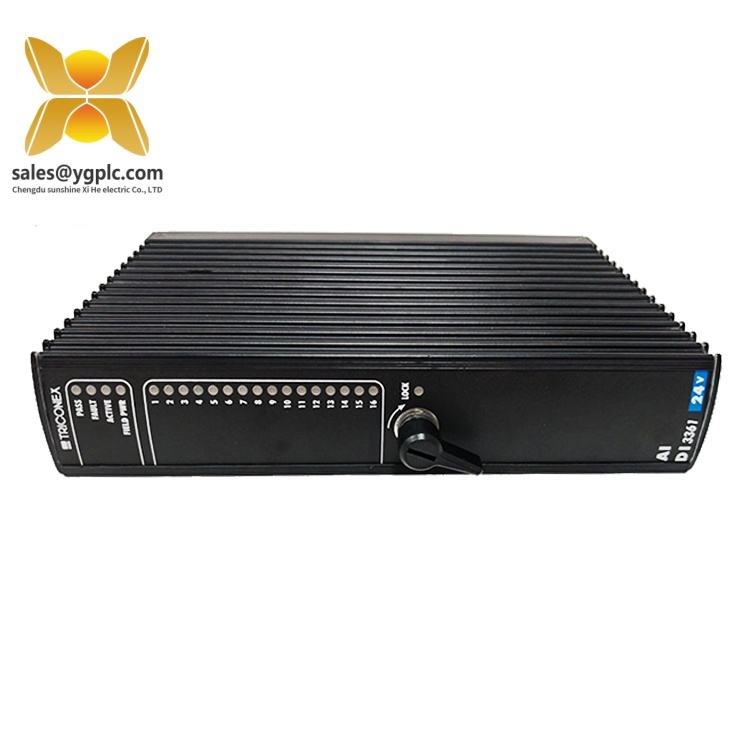
ABB SUE 3000 – High Speed Bus Transfer Device
Product Overview
The SUE 3000 is a high-speed automatic transfer system designed to maintain uninterrupted power supply for critical industrial loads. When the primary feeder experiences a voltage dip or complete outage, the device rapidly switches the load bus to a standby source, preventing costly process shutdowns and equipment damage. It serves as a core component of ABB’s ProtectIT medium voltage distribution solutions, deployed across manufacturing, data centers, and process industries where even brief power interruptions cause significant production loss.
With transfer times as fast as 30 milliseconds between synchronized sources, the unit achieves near-seamless source changeover that sensitive electronic loads can ride through without tripping. The system supports four distinct transfer modes to cover different fault scenarios and network conditions, and it works with both new and existing switchgear installations. Built-in self-diagnostics and SIL 3 safety certification ensure dependable operation when it matters most, making the solution suitable for the most demanding continuous-process applications.
Technical Specifications — SUE 3000
| Parameter | Value |
|---|---|
| Product Model | 1VCR007346 G0032 (central unit variant) |
| Manufacturer | ABB |
| Product Type | High Speed Transfer Device (HSTD / HSTS) |
| Power Rating | 80–250 V AC supply, compatible with all standard MV voltage levels |
| Communication / Protocol | Relay and I/O interfaces, status signaling |
| Operating Temperature | Industrial cabinet ambient range |
| Mounting | DIN rail (35mm) or panel flush mounting |
| Dimensions (HxWxD) | 180 x 250 x 105 mm (control unit) |
| Weight | ~2.3 kg |
| Typical Interfaces | Voltage sensing inputs, breaker control outputs, HMI, status relays |
| Compliance | SIL 3 (IEC 61508), PL e (ISO 13849-1) |
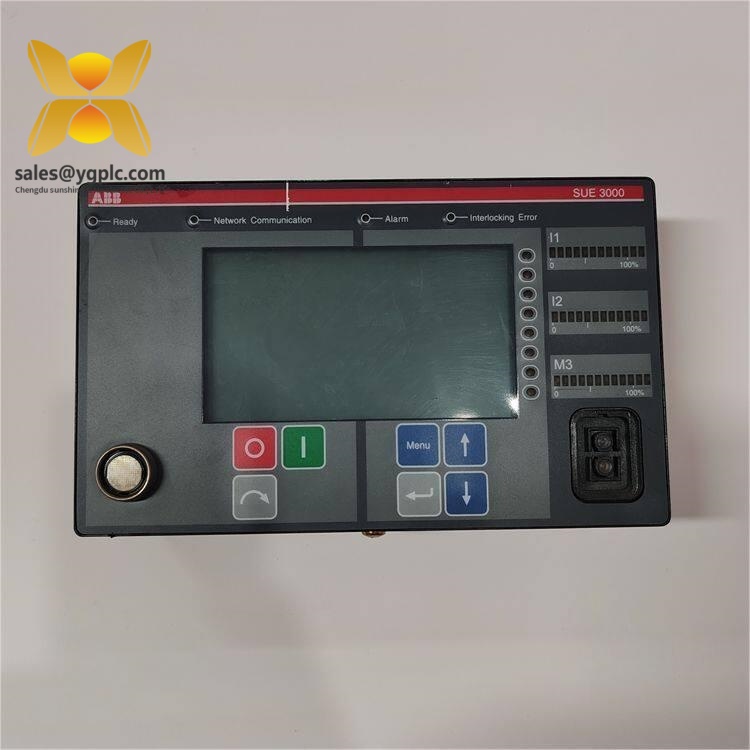
ABB SUE 3000
Key Features and Benefits
- Sub-Cycle Transfer Speed: Achieves 30 ms (1.5 cycle) source changeover between synchronized incomers, fast enough for most process and motor loads to survive without shutdown.
- Four Transfer Modes: Offers fast, in-phase, residual-voltage, and timed transfer strategies to match different network conditions and load sensitivity requirements.
- High Safety Integrity: Certified to SIL 3 and Performance Level e, with continuous hardware and software self-diagnostics for maximum operational dependability.
- Broad Voltage Compatibility: Works across all common medium voltage levels and integrates with both new installations and existing switchgear retrofits.
- Manual Transfer Capability: Supports operator-initiated transfers for planned maintenance or switching operations, simplifying routine network management.
- Compatible Protection Ecosystem: Pairs natively with ABB REF series protection relays and VM1-T high-speed vacuum circuit breakers for optimized system performance.
Related Models
VM1-T: High-speed vacuum circuit breaker with magnetic actuator that, when paired with the transfer controller, enables the fastest possible source changeover sequences.
REF 615: Feeder protection relay that provides voltage and frequency sensing inputs used by the transfer system to detect source failure and validate standby health.
REF 542 Plus: Advanced feeder terminal commonly integrated with the transfer device in comprehensive medium voltage distribution automation schemes.
SUE 3000 Cabinet Version: Factory-assembled steel enclosure variant of the system, delivered pre-wired and ready for drop-in switchyard installation.
Installation and Maintenance
Installation should be performed by qualified medium voltage personnel. Mount the central control unit on a 35mm DIN rail inside the switchgear low-voltage compartment, or use the panel-mount variant for front-door access. Connect voltage sensing inputs from both incoming feeders and the load bus, ensuring correct phase rotation matching between sources. Wire circuit breaker close and trip coils to the designated output terminals, observing proper insulation and segregation between LV control and MV power circuits.
Commissioning involves configuring transfer mode priorities, voltage and frequency thresholds, phase-angle windows, and maximum allowed frequency df/dt limits based on site network characteristics. Perform a functional test of each transfer mode under controlled conditions before placing the system into service. Verify that both manual and automatic initiation paths work correctly and that interlock logic prevents closed-transition paralleling where not permitted.
Routine maintenance is largely preventive. Periodically inspect status indicators, confirm voltage readings match metered values, and exercise manual transfer functionality during scheduled outages. The solid-state design contains no user-serviceable moving parts. Firmware and configuration settings can be updated via the front panel or service port when required. Always follow lockout/tagout procedures before working on any associated medium voltage equipment, and keep spare control modules on hand for critical installations to minimize replacement downtime.