中文版

 Phone:
 Email:
 WhatsApp:
Description
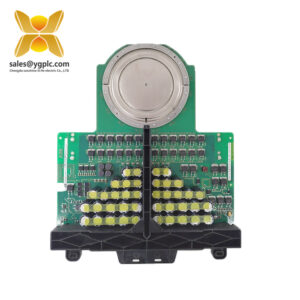
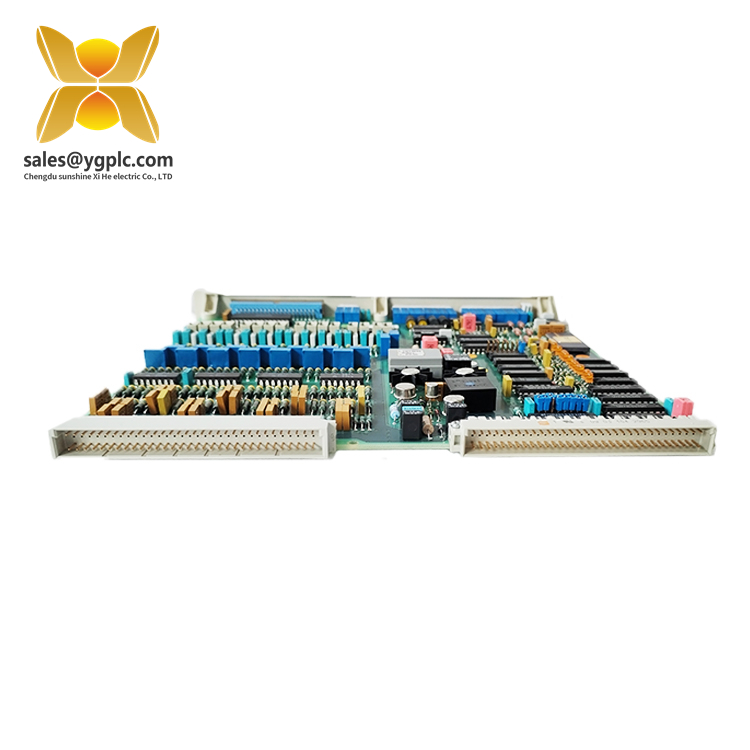
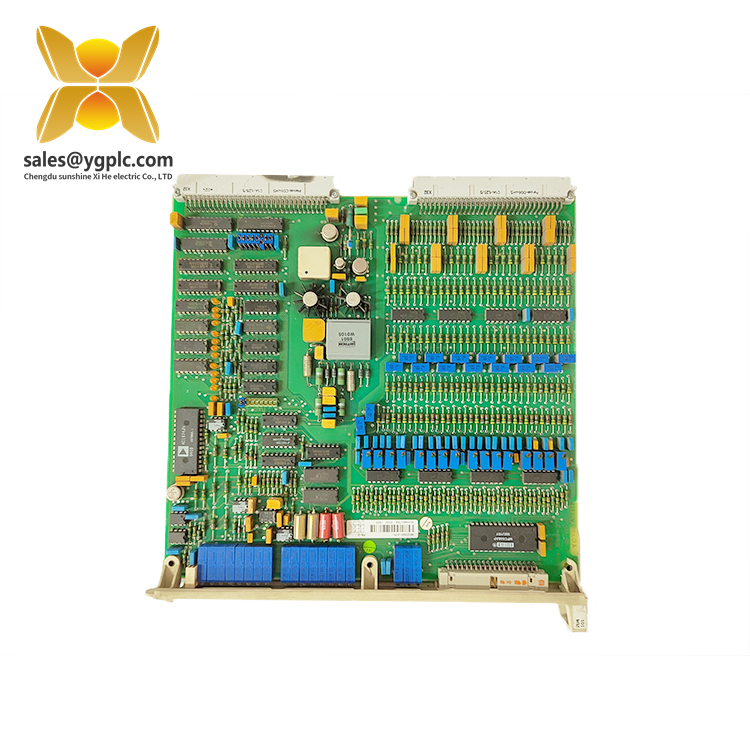
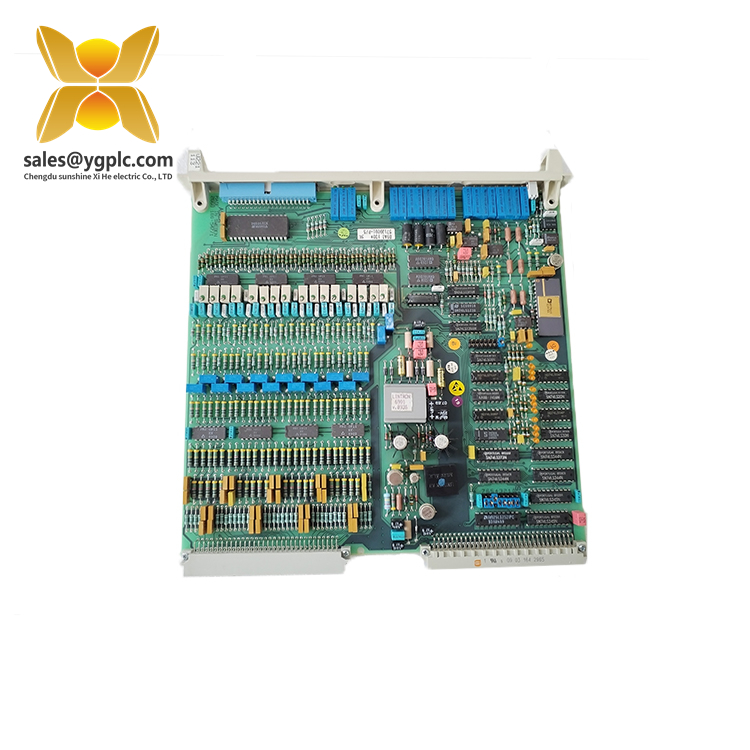
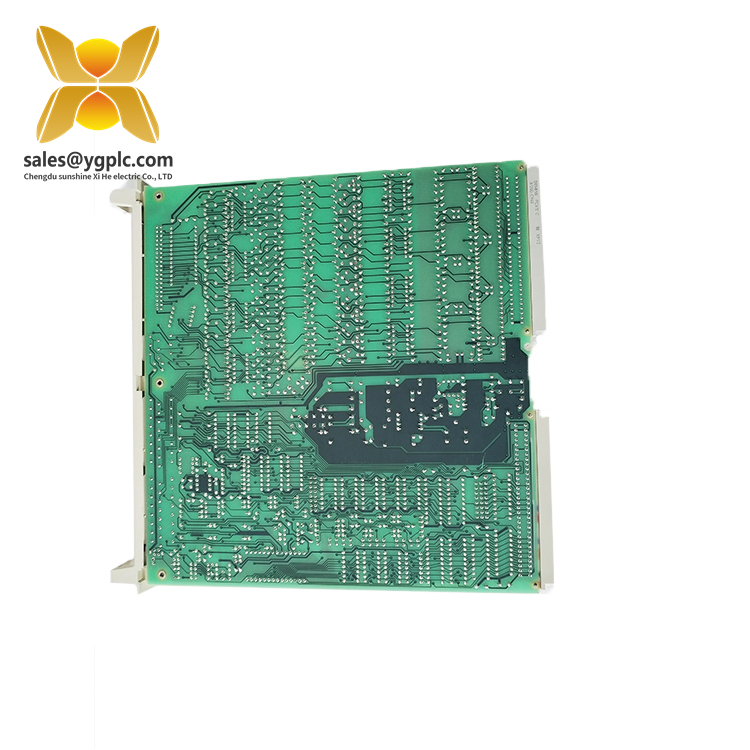
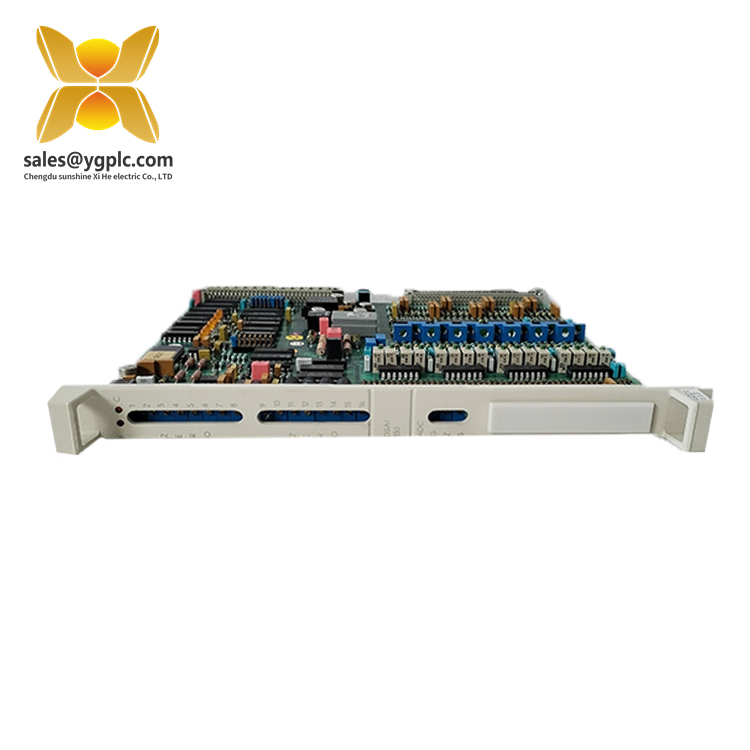
The ABB DSAO110, product number 57120001-AT, is a four-channel analog output module designed for industrial automation control systems. It converts controller output commands into analog electrical signals for connected field equipment. The module supports voltage output from 0 to 10 V and current output from 0 to 20 mA, allowing it to serve as an output interface between control-system logic and devices requiring variable analog commands.
The DSAO110 provides four analog output channels with a specified accuracy of 0.05% and electrical isolation. Its product dimensions are 209.7 × 225 × 18 mm, and its net weight is 0.595 kg. The module is associated with ABB’s S100 I/O product range. When selecting it for maintenance or replacement, confirm the installed I/O arrangement, associated connection unit, and field-wiring requirements to ensure the complete assembly matches the existing system.
Key Technical Specifications
| Parameter | Specification |
|---|---|
| Manufacturer | ABB |
| Model | DSAO110 |
| Product number | 57120001-AT |
| Product type | Analog output module |
| I/O category | Analog output (AO) |
| Number of channels | 4 |
| Voltage output range | 0–10 V |
| Current output range | 0–20 mA |
| Specified accuracy | 0.05% |
| Isolation | Isolated |
| Associated I/O family | S100 I/O |
| Net dimensions (D × W × H) | 209.7 × 225 × 18 mm |
| Net weight | 0.595 kg |
| Exchange number | EXC57120001-AT |
Detailed Product Overview
The ABB DSAO110 (57120001-AT) is an analog output module for industrial control applications. Its primary function is to provide analog command signals from a control system to connected equipment. Unlike a digital output, which represents discrete states, an analog output can represent a variable command within a defined signal range.
The module has four output channels and supports 0–10 V voltage signals and 0–20 mA current signals. These signal formats are commonly used for equipment requiring continuously adjustable control inputs. The appropriate output type depends on the receiving device, the configured control strategy, and the electrical requirements of the field circuit.
The stated accuracy of 0.05% is a useful specification when evaluating the module for an application in which output-signal accuracy matters. However, accuracy alone does not establish the total accuracy of a complete control loop. Controller calculations, field wiring, receiving-device characteristics, and operating conditions can also affect the resulting process response.
Electrical isolation is another relevant characteristic when assessing an analog output interface. Isolation can help separate electrical circuits, but the specific isolation arrangement and its limits must be understood from the applicable technical documentation before designing grounding or wiring arrangements.

- ABB Advant Master -S100 I_O System
- ABB Advant Master -S100 I_O System
- ABB Advant Master -S100 I_O System
ABB Advant® Master S100 I/O System
Product Overview
The ABB Advant® Master S100 I/O system is the central process interface for Advant Controller 400 series process controllers. Designed for centralized I/O systems and high-speed applications, it features built-in cable marshalling facilities and parallel communication with the host controller.
The S100 I/O system provides a comprehensive range of process I/O modules, including general-purpose digital and analog inputs and outputs, as well as specialized interfaces for pulse counting, frequency measurement, positioning, motor speed control, and communication with other controllers.
All I/O modules support straightforward interfacing, accurate and fast control, and seamless integration of individual control loops into a comprehensive plant-wide control and supervision system.
Main Features and Advantages
1. Flexible Installation and Cable Marshalling
The S100 I/O interface modules connect to field devices through screw terminals on connection units, which are normally installed inside the rear of the cabinet. This arrangement helps protect the central electronics from electrical noise and destructive voltage spikes while providing an organized and easily maintained process interface.
Prefabricated cables connect the I/O modules to the connection units. Available in different lengths, these cables allow flexible installation and cable termination within the controller cabinet, in adjacent cabinets, or in cabinets located farther away.
The connection units support both signal-oriented and device-oriented field wiring:
- Signal-oriented wiring: Field wires with similar electrical characteristics, such as 24 V DC input signals, are grouped and terminated together.
- Device-oriented wiring: Field wires connected to the same field devices are grouped and terminated together.
Combining these wiring approaches provides considerable flexibility during system installation and maintenance.
2. On-Board Processing Capabilities
S100 I/O modules feature on-board processing capabilities, allowing module-related signal and data processing to be performed locally rather than centrally by the host controller CPU.
Examples of on-board functions include event time tagging, signal filtering, and gain control. Distributing these functions across individual modules improves real-time performance and overall system reliability while helping maintain processing capacity as the system expands.
3. Comprehensive Self-Diagnostics
Comprehensive self-diagnostic functions continuously monitor the I/O modules and report errors through front-panel LEDs, alarm messages, and indications at process operator stations.
Malfunctioning inputs can be disabled and simulated through manual entry. Failing outputs can be deactivated or automatically driven to a predetermined safe state.
All I/O modules can be replaced while the system remains in service. Selected modules also support transparent dual-redundant configurations to enhance system availability.
4. High Electromagnetic Disturbance Immunity
S100 I/O modules are designed to provide high immunity to electromagnetic disturbances. According to the product documentation, the modules comply with the requirements of EU Directives 2014/30/EU and 2014/35/EU.
These features make the S100 I/O system suitable for connecting industrial control systems to field devices in demanding process automation environments.
Installation Examples
Figure 1. Example of an S100 I/O installation
RE500 cabinets equipped with an S100 I/O subrack, connection units, and a power supply for sensors.
Figure 2. Example of an S100 I/O cabinet installation
An RE500 cabinet showing process cables at the bottom of the cabinet and field wiring terminated on the connection units.abb.com/controlsystems